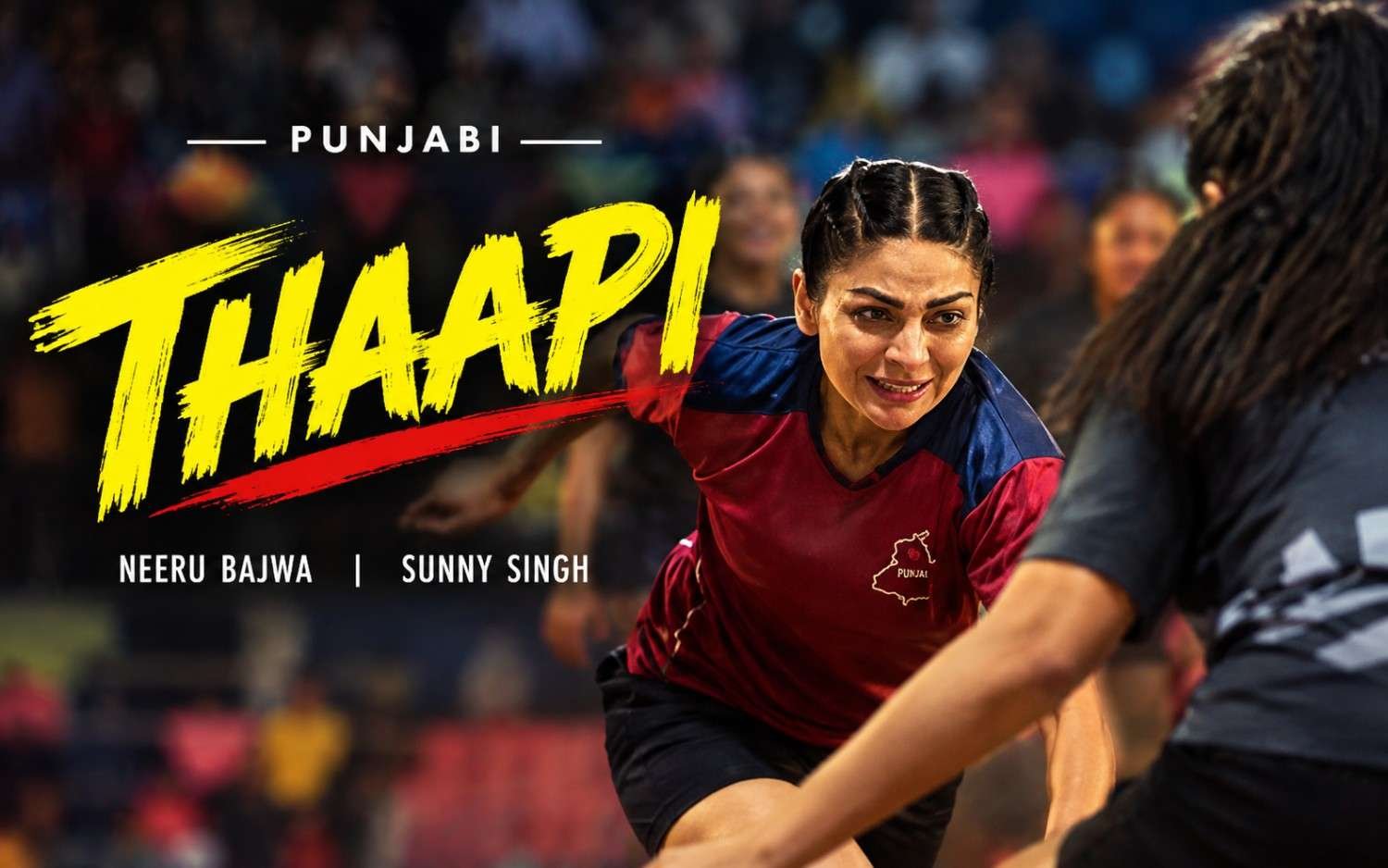
THAAPI – Punjabi | Neeru Bajwa | Sunny Singh
Movie Details
| Attribute | Details |
| Movie Name | THAAPI |
| Director | Jagdeep Warring |
| Lead Cast | Neeru Bajwa, Sunny Singh |
| Supporting Cast | Hashneen Chauhan, Sawan Rupowali, Sukhwinder Chahal, Pawan Johal, Seema Kaushal, Malkeet Rauni, Tarsem Paul, Simran Chahal, Nikita Grover, Parveen Khan, Kewal Dhaliwal, Sahib Singh, Gopi Bhalla, Ravinder Mand |
| Genre | Sports Drama / Social Family Drama |
| Release Date / Platform | October 16, 2026 (Theatrical Release) |
| Rating | 4.0 out of 5 Stars |
THAAPI – Punjabi | Neeru Bajwa | Sunny Singh
Introduction & Overview
Punjabi cinema has undergone a remarkable metamorphosis over the past few years, evolving from formulaic slapstick comedies to narrative-driven cinema rooted in social realism, cultural pride, and women’s empowerment. Emerging as a powerhouse in this transformative era is the upcoming Punjabi feature film titled THAAPI, starring the undisputed Queen of Pollywood, Neeru Bajwa, alongside the versatile Sunny Singh. Directed and written by acclaimed storyteller Jagdeep Warring, the film has generated immense buzz across global Punjabi audiences ever since the unveil of its first teaser and official announcements.
The title THAAPI carries deep cultural resonance in Punjab. Literally referring to the rhythmic, powerful thigh-slap performed by traditional wrestlers and Kabaddi players before entering the sand pit, Thaapi symbolizes an assertive declaration of courage, challenge, confidence, and identity. Unlike conventional sports dramas that center exclusively on male athleticism, this film flips patriarchal tropes on their head. It intertwines traditional rural family dynamics with the fierce grit of women’s Kabaddi. By placing female athletes at the heart of an arena historically dominated by men, THAAPI promises to deliver a high-octane blend of emotional gravitas, social commentary, and exhilarating sports action. Initial industry impressions and audience excitement suggest that THAAPI is poised to be one of the most compelling regional cinema releases of the year.
Detailed Plot Summary
The narrative background of THAAPI unfolds within the heartland of rural Punjab, where deeply ingrained patriarchal traditions dictate family legacies and social hierarchies. At the center of the story is an aging, proud former wrestler whose entire worldview revolves around male lineage, ancestral pride, and the continuation of his sports legacy through a male heir. For decades, he has held the belief that physical strength, sportsmanship, and carrying the family name forward are privileges reserved solely for men.
The story takes a dramatic turn when his household faces social friction and domestic expectations regarding heirship. Instead of submitting to age-old prejudices, his resolute daughter-in-law (played with fierce intensity by Neeru Bajwa) decides to redefine the very concept of legacy. Recognizing the untapped potential, resilience, and suppressed spirit of young women in the village, she takes on the monumental challenge of assembling and coaching an all-female Kabaddi team.
Building this team is far from easy. She encounters stiff resistance from conservative village elders, skeptical family members, and deep-rooted societal stereotypes that deem women unfit for contact sports. She brings together six distinct young women, each fighting her own personal battles against gender bias, societal restrictions, and domestic limitations. Together, these women learn to master the physical demands of Kabaddi—a sport requiring raw power, agility, tactical cunning, and relentless breath control.
As the team prepares to compete in high-stakes regional tournaments, the battle extends far beyond the boundaries of the Kabaddi court. The matches become a symbolic arena where these six young women fight for their dignity, self-respect, and equal standing in society. Without revealing key plot twists or climax spoilers, THAAPI navigates the emotional arc of how an uncompromising patriarch’s rigid mindset is challenged by the undeniable strength of women who prove that honor and legacy are not determined by gender, but by character, courage, and grit.
Cast Performances & Character Breakdown
The performance spectrum in THAAPI stands out as one of its strongest pillars, driven by an impressive ensemble cast comprising seasoned veterans and dynamic young talent. Every actor brings authenticity to their character, enriching the overall narrative quilt of rural Punjab.
- Neeru Bajwa as the Central Force: Neeru Bajwa continues her streak of taking on bold, progressive roles that challenge traditional storytelling boundaries. Following her critically acclaimed performances in films like Kali Jotta, Shayar, and Buhe Bariyan, Bajwa delivers another commanding performance in THAAPI. Playing the role of a determined daughter-in-law turned mentor, she embodies restraint, emotional maturity, and fierce leadership. Her screen presence is magnetic; she switches effortlessly between quiet domestic emotional beats and high-energy motivational sequences on the Kabaddi field. Her portrayal gives the film its moral anchor and emotional weight.
- Sunny Singh in a Pivotal Co-Lead Role: Sunny Singh delivers a finely calibrated performance that complements Neeru Bajwa’s strength. Standing at the intersection of filial duty and progressive change, Singh portrays a character who must navigate the conflict between honoring an unyielding father and supporting a visionary wife. His nuanced expressions and grounded dialogue delivery add sincerity to the household dynamic, making his character arc crucial to the film’s thematic balance.
- The Kabaddi Players & Key Supporting Cast: The young ensemble playing the six female Kabaddi players—including talent like Hashneen Chauhan, Sawan Rupowali, Pawan Johal, Simran Chahal, Nikita Grover, and Parveen Khan—form the energetic heartbeat of the movie. Each actress brings distinct individuality to her character’s background, capturing the vulnerability, rage, and triumph of rural women breaking free from societal constraints. Their physical preparation for the Kabaddi sequences feels authentic, lending genuine athleticism to the sporting action.
- Veteran Performers Adding Depth: The veteran cast members, including Sukhwinder Chahal, Seema Kaushal, Malkeet Rauni, Tarsem Paul, Kewal Dhaliwal, Sahib Singh, Gopi Bhalla, and Ravinder Mand, provide structural stability to the narrative. Sukhwinder Chahal brings towering authority and rigid traditionalism to his role as the patriarch, creating a formidable opposition for the protagonists. Seema Kaushal and Malkeet Rauni provide delicate emotional resonance and occasional lighthearted relief, ensuring the film maintains a balanced emotional rhythm throughout its runtime.
Direction, Screenplay & Technical Aspects
The direction and screenplay of THAAPI, crafted by Jagdeep Warring, reflect a mature understanding of visual storytelling and cultural realism. Warring successfully avoids the trap of preachy melodrama by embedding the film’s social commentary directly into the kinetic energy of sports. His pacing allows the audience to bond with the characters during the first half before escalating the narrative momentum into exhilarating athletic contests in the second half.
- Cinematography & Visual Design: The camera work captures rural Punjab in its raw, authentic glory. Instead of relying solely on gloss, the cinematography highlights the earthy textures of the dusty Kabaddi pits, open mustard fields, and traditional ancestral homes. The multi-camera setups during the Kabaddi match sequences deserve special praise; they capture the high-velocity tackles, raids, and physical impacts with crisp fluidity, placing the audience right in the middle of the arena.
- Editing & Pacing: The editing keeps the narrative taut and engaging. The transitions between emotional family dialogue and intense sports training montages are seamlessly executed, ensuring that the film’s 130-minute runtime never feels sluggish or repetitive.
- Music & Background Score: Music plays a vital role in elevating the motivational undercurrents of THAAPI. The soundtrack blends traditional Punjabi folk instruments—such as the dhol, tumbi, and algoze—with modern orchestral arrangements. The title track and high-energy training anthems amplify key moments of triumph, while the subtle background score heightens the tension during domestic confrontations and championship matches.
Strengths & Weaknesses / Pros & Cons
To provide a quick and objective assessment, here is a breakdown of the primary strengths and minor drawbacks of THAAPI:
Strengths (Pros)
- Empowering & Fresh Premise: Focusing on women’s Kabaddi provides a unique, refreshing sports drama narrative in regional Indian cinema that goes beyond conventional storylines.
- Stellar Performance by Neeru Bajwa: Neeru Bajwa delivers another memorable, power-packed performance that solidifies her reputation for selecting meaningful, social-impact cinema.
- Authentic Sports Choreography: The Kabaddi action sequences are executed with high technical precision, grit, and convincing physical realism.
- Strong Ensemble Cast: A talented mix of veteran actors and dynamic young co-stars ensures strong emotional depth across all subplots.
- Inspiring Musical Score: The background music and motivational tracks effectively elevate key narrative moments and emotional climaxes.
Weaknesses (Cons)
- Predictable Sports Tropes: Like many sports dramas, certain beats of the tournament arc follow a familiar structure seen in genre classics.
- Pacing in the Initial Setup: The setup establishing the patriarch’s worldview takes a bit of time before the central Kabaddi storyline fully kicks into high gear.
Final Verdict & Target Audience
THAAPI stands out as a triumphant, empowering cinematic effort that seamlessly bridges hard-hitting social commentary with wholesome mainstream entertainment. Directed with conviction by Jagdeep Warring and spearheaded by stellar performances from Neeru Bajwa, Sunny Singh, and a dynamic supporting cast, the film delivers an inspiring message about breaking stereotypes, reclaiming dignity, and redefining family legacy.
Target Audience: This film is a must-watch for fans of inspirational sports dramas, women-centric narratives, and high-quality Punjabi cinema. It holds universal family appeal and will resonate strongly with audiences who appreciate cinema that entertains while provoking meaningful thought.
Where to Watch:THAAPI demands a big-screen experience in theaters to fully appreciate the thrilling energy of its Kabaddi sequences and rich sound design. If you miss its theatrical run, it will undoubtedly make for an essential, high-value watch on OTT platforms. Do not miss this powerful cinematic journey of courage and identity!