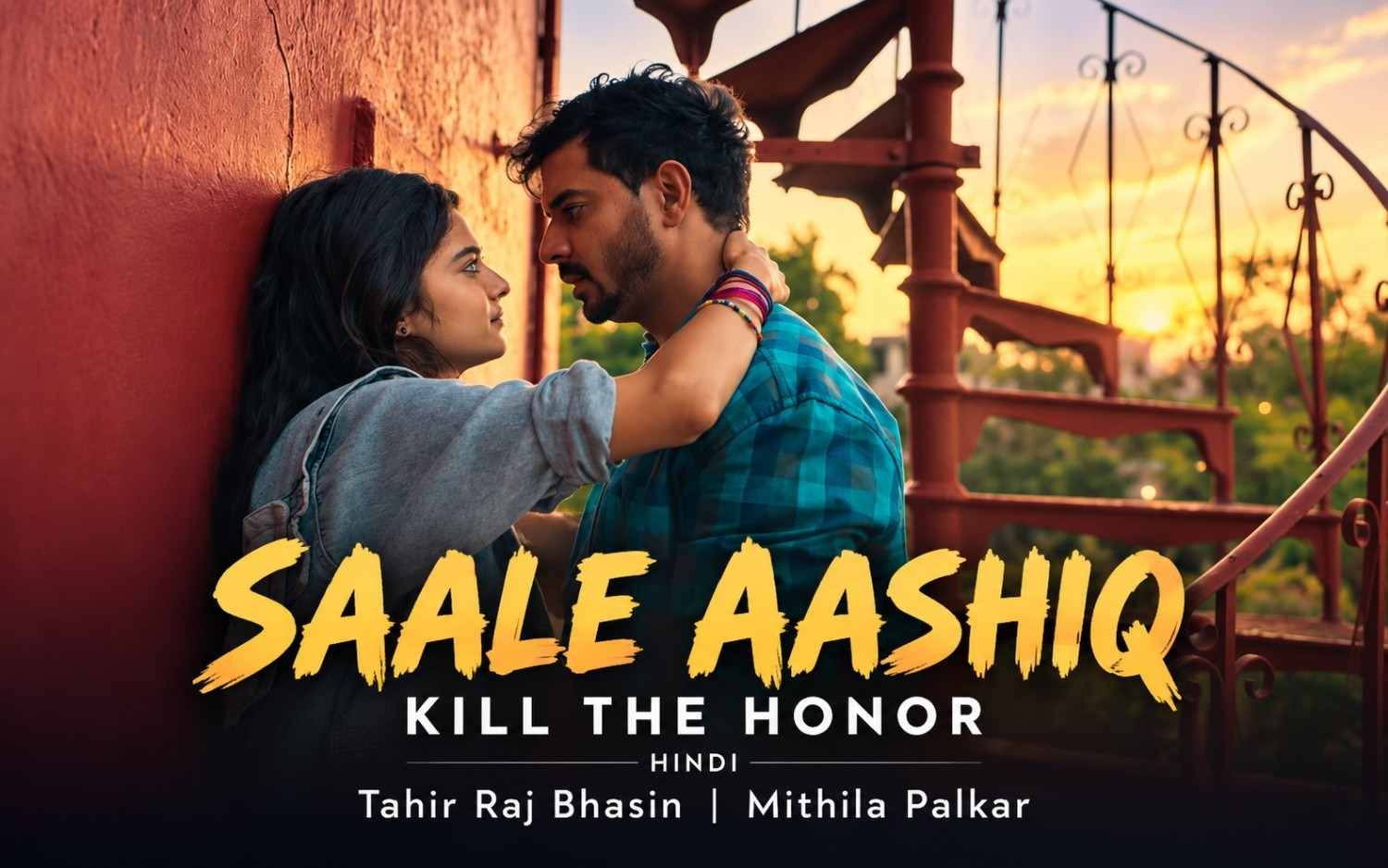
Saale Aashiq | Kill the Honor – Hindi | Tahir Raj Bhasin | Mithila Palkar
Movie Details
| Movie Details | Information |
|---|---|
| Movie Name | Saale Aashiq |
| Director | Siddharth Singh & Garima Wahal |
| Lead Cast | Tahir Raj Bhasin, Mithila Palkar |
| Supporting Cast | Chunky Pandey, Tanvi Azmi, Darshan Jariwala, Vrajesh Hirjee, Neelima Azim, Rajesh Jais, Aditi Sanwal, Zahid Khan, Vyom Sharma, Rishi Jaiswal, Sadanand Patil, Ujjwal Kumar, Ishan Mishra, Aarti Yadav, Vishal Rathore, Ankit Vidyarthi, Priti Mohil, Akshay Meshram |
| Genre | Romantic Drama / Social Drama |
| Language | Hindi |
| Release Date | 1 February 2025 |
| OTT / Viewing Platform | Sony MAX / Digital Streaming |
| Runtime | Approximately 2 hours |
| Production | Sony Pictures Films India |
| Cinematography | Nuthan Nagaraj |
| Editing | Devendra Murdeshwar |
| Rating | 3.5/5 Stars |
Saale Aashiq | Kill the Honor – Hindi | Tahir Raj Bhasin | Mithila Palkar
Introduction & Overview
Saale Aashiq is a Hindi romantic social drama that explores love, caste, family honour, social pressure and the difficult battle for personal freedom. Starring Tahir Raj Bhasin and Mithila Palkar in the lead roles, the film presents the relationship between two young people who fall in love despite coming from different social backgrounds.
Directed by Siddharth Singh and Garima Wahal, the movie attempts to go beyond the familiar structure of a conventional romantic drama. Instead of focusing exclusively on the emotional journey of two lovers, it places their relationship against a society where family expectations and traditional ideas can become powerful obstacles.
At the heart of Saale Aashiq is a simple but important question: Should individuals have the freedom to choose whom they love and marry? The film uses its central romance to explore the consequences of challenging deeply established social boundaries.
The performances of Tahir Raj Bhasin and Mithila Palkar provide the emotional foundation of the movie, while an experienced supporting cast adds further weight to the family and social conflicts.
Detailed Plot Summary
The story of Saale Aashiq revolves around Shatru and Gudia, two young people who fall deeply in love despite belonging to different caste backgrounds. Their relationship begins as a personal connection between two individuals, but it soon becomes a much larger conflict involving their families and the society around them.
Shatru and Gudia want to build a life together according to their own choices. However, their relationship challenges the traditional expectations of the people around them. Once their love becomes known, the couple finds themselves facing opposition from those who believe that family reputation and social status should take priority over individual happiness.
What initially appears to be a romantic conflict gradually becomes much more serious. The pressure surrounding the couple increases, forcing them to confront difficult questions about loyalty, courage and sacrifice.
The film does not simply portray the protagonists as passive victims of social circumstances. Instead, their struggle becomes a fight for their right to make their own decisions. This gives the story a stronger sense of purpose and allows the romantic relationship to become part of a wider discussion about social restrictions.
As the narrative progresses, Shatru and Gudia find themselves trapped between their feelings for one another and the expectations imposed upon them. Family members attempt to influence their decisions, while the fear of social consequences creates additional tension.
The second half of the film raises the emotional stakes considerably. The couple must decide how far they are willing to go to protect their relationship and whether their love is strong enough to withstand the consequences of standing against established traditions.
Without revealing the major twists, Saale Aashiq gradually transforms from a love story into an intense social drama. The film explores how concepts such as honour, caste, reputation and family authority can affect the lives of young people who simply want the freedom to choose their own future.
The result is a narrative that combines romance with serious social commentary while maintaining the relationship between Shatru and Gudia as its emotional centre.
Cast Performances & Character Breakdown
Tahir Raj Bhasin as Shatru
Tahir Raj Bhasin delivers a committed performance as Shatru, the male protagonist whose relationship with Gudia becomes the centre of the film’s conflict.
Shatru is not portrayed as a stereotypical action hero. His character experiences uncertainty, fear and emotional pressure while attempting to protect his relationship. This makes the character considerably more relatable.
Tahir Raj Bhasin brings intensity to the role without making every scene unnecessarily dramatic. His expressions effectively communicate the internal struggle of a young man caught between love and the expectations of society.
His strongest moments come when Shatru has to make difficult choices. The performance successfully balances romantic vulnerability with determination, giving the character enough emotional depth to carry the film.
Mithila Palkar as Gudia
Mithila Palkar plays Gudia, the female lead and Shatru’s romantic partner.
Gudia is not simply presented as a character waiting for someone else to make decisions for her. She has her own emotional strength and perspective, making her an important part of the film’s central conflict.
Mithila Palkar gives the character a natural quality. Her performance feels particularly effective in quieter scenes where Gudia has to process the consequences of the decisions being made around her.
Her chemistry with Tahir Raj Bhasin is another positive aspect of the film. The relationship between Shatru and Gudia feels more convincing because their interactions are not limited to dramatic declarations of love. Their quieter moments help establish the emotional connection that drives the larger story.
Chunky Pandey as Jagdish Bhajmodia
Chunky Pandey plays Jagdish Bhajmodia and adds another interesting dimension to the supporting cast.
The role gives Pandey an opportunity to participate in a more serious dramatic environment. His presence contributes to the wider social world surrounding the protagonists and adds variety to the ensemble.
Tanvi Azmi as Saroja Kiwal
Tanvi Azmi plays Saroja Kiwal, bringing maturity and authority to the family-drama portions of the film.
Her performance works particularly well because she represents the older generation and the complicated emotional relationship between family expectations and individual decisions.
Darshan Jariwala as Raghubir Kiwal
Darshan Jariwala plays Raghubir Kiwal. His performance adds weight to the family conflict and reinforces the atmosphere of authority surrounding the protagonists.
Jariwala’s controlled screen presence suits a story where tension often comes from conversations, expectations and emotional pressure rather than conventional action.
Vrajesh Hirjee, Neelima Azim and Rajesh Jais
Vrajesh Hirjee, Neelima Azim and Rajesh Jais further strengthen the supporting ensemble.
Vrajesh Hirjee plays Subhash Kamat, while Neelima Azim appears as Gendhi Rewal and Rajesh Jais plays Charanjit Rewal. Their characters help expand the film beyond the central romance and create a broader network of family and social relationships.
Other supporting performers include Aditi Sanwal as Meena, Zahid Khan as Gattu, Vyom Sharma as Jigra, Rishi Jaiswal as Police Inspector Shaleen Kachot, Sadanand Patil as Deewanji, Ujjwal Kumar as Billu, Ishan Mishra as Manipal Kiwal, Aarti Yadav, Vishal Rathore, Ankit Vidyarthi, Priti Mohil and Akshay Meshram.
The ensemble succeeds in creating a believable environment around the central couple, making their struggle feel like part of a larger social conflict rather than an isolated family disagreement.
Direction, Screenplay & Technical Aspects
Siddharth Singh and Garima Wahal approach Saale Aashiq with a clear focus on the social consequences of love that crosses traditional boundaries.
The direction works best when the filmmakers allow the emotional conflict to develop naturally. The film does not depend entirely on romantic clichés. Instead, the relationship between Shatru and Gudia is used to introduce larger questions about social identity, family honour and individual freedom.
The screenplay combines romance, family drama and elements of social tension. The opening portions establish the central relationship, while the later sections gradually increase the pressure surrounding the protagonists.
The cinematography by Nuthan Nagaraj supports the grounded nature of the story. The visual treatment avoids making the film feel excessively glamorous and instead complements its realistic social setting.
Devendra Murdeshwar’s editing keeps the narrative focused while allowing sufficient space for the emotional developments between the characters.
Music also plays an important role in establishing the romantic atmosphere. Songs such as “Saale Aashiq,” “Ishq Hona Hi Tha,” “Bargad,” “Rewa Aarti,” “Sang Tu Yaara” and “Ishq Ka Pyaala” add emotional variety to the film.
The romantic songs provide moments of relief from the heavier subject matter, while the background score contributes to the more serious and tense portions of the narrative.
Technically, the film works because its visual and musical elements generally remain connected to the emotional tone of the story rather than distracting from its central theme.
Strengths & Weaknesses / Pros & Cons
Pros
- Strong social theme: The movie tackles important issues involving caste, family honour, social pressure and freedom of choice.
- Tahir Raj Bhasin’s performance: His portrayal of Shatru gives the protagonist emotional depth and determination.
- Mithila Palkar’s performance: Gudia is given personality and agency, allowing Palkar to deliver a grounded performance.
- Lead-pair chemistry: Tahir Raj Bhasin and Mithila Palkar share convincing chemistry that makes the central relationship believable.
- Strong supporting cast: Chunky Pandey, Tanvi Azmi, Darshan Jariwala, Vrajesh Hirjee, Neelima Azim and Rajesh Jais contribute effectively.
- Relevant subject: The film deals with issues that remain socially significant and emotionally powerful.
- Different approach: Rather than relying entirely on tragedy, the story gives its protagonists an opportunity to fight for their choices.
- Music: The soundtrack complements the romantic and emotional elements of the story.
Cons
- Uneven pacing: Some sections take longer than necessary to establish the social circumstances surrounding the characters.
- Serious tone: The film may not appeal to viewers looking for a light-hearted romantic entertainer.
- Occasional melodrama: A few dramatic moments feel more cinematic than completely natural.
- Limited conventional romance: The film’s primary focus eventually shifts toward social conflict, meaning viewers expecting a traditional love story may find the tone heavier than anticipated.
- Predictable elements: Some aspects of the conflict may feel familiar to audiences who have watched other Indian social dramas dealing with family opposition and inter-caste relationships.
Final Verdict & Target Audience
Saale Aashiq is a serious Hindi romantic drama that combines a love story with an examination of caste, family honour, social pressure and individual freedom.
The biggest strength of the film is its central idea. Shatru and Gudia are not merely fighting for their relationship; they are fighting for the right to make decisions about their own lives.
Tahir Raj Bhasin and Mithila Palkar provide the film with a strong emotional centre, while the supporting cast gives the family drama additional depth. The direction, music and grounded visual treatment complement the film’s serious subject.
The movie is best suited to viewers who enjoy social dramas, romantic films with meaningful themes, character-driven Hindi cinema and stories about challenging traditional expectations.
Those looking for a simple romantic comedy may find the film too serious, but audiences interested in socially relevant storytelling should find plenty to appreciate.
Saale Aashiq is ultimately a thoughtful romantic social drama that uses the story of two lovers to explore much larger questions about love, identity, family and freedom. It may not always deliver a perfectly balanced narrative, but its subject matter, performances and central message make it a worthwhile watch for viewers seeking something more substantial than a conventional love story.