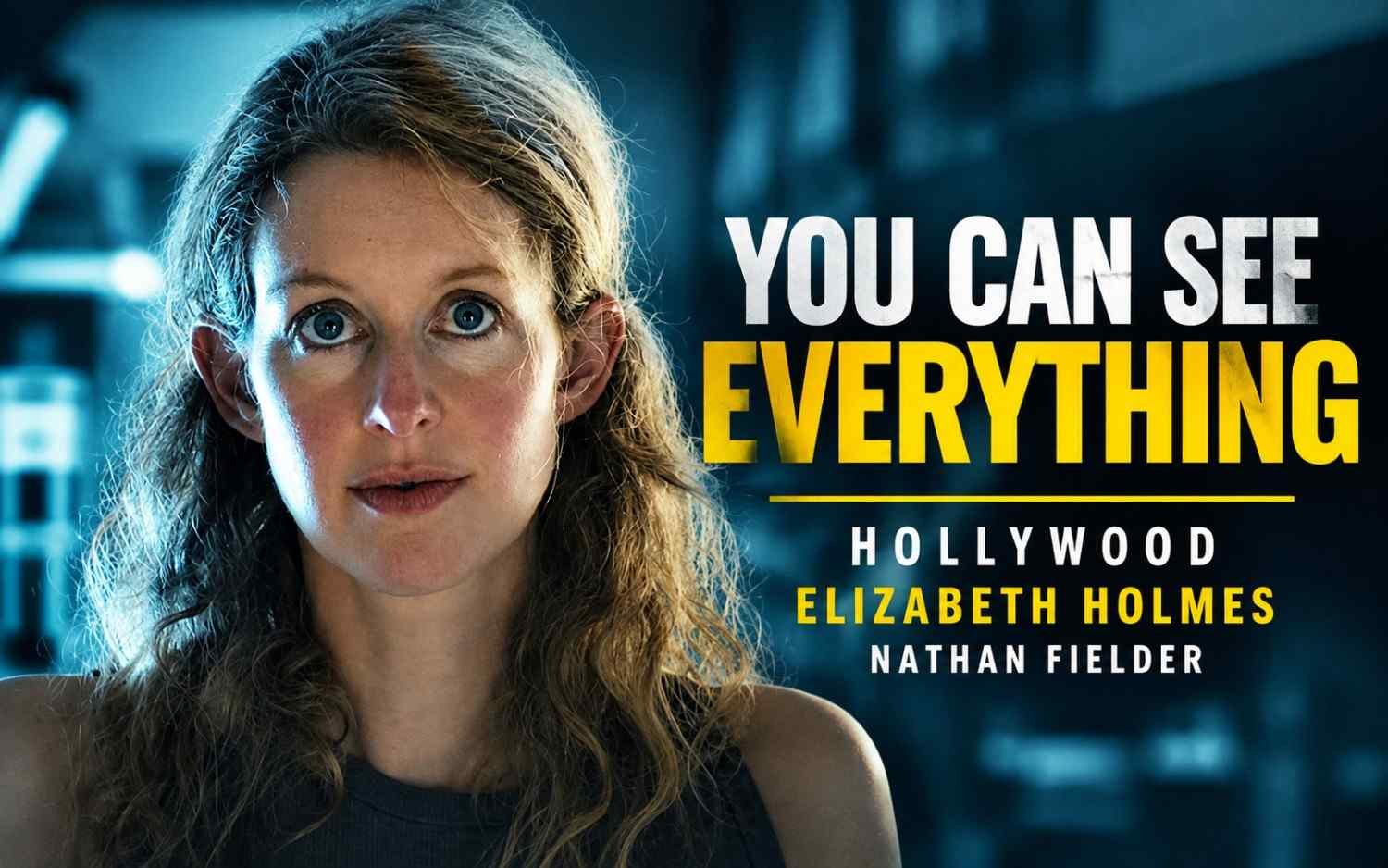
You Can See Everything – Hollywood | Elizabeth Holmes | Nathan Fielder
Movie Details
| Attribute | Details |
| Movie Name | You Can See Everything |
| Director | Nathan Fielder |
| Lead Cast | Elizabeth Holmes (as Herself), Nathan Fielder (as Himself) |
| Supporting Cast | Billy Evans, Amanda Enayati, Christian Holmes, Richard Fuisz |
| Genre | Avant-Garde Documentary / Satirical Psychological Drama |
| Release Date / Platform | October 23, 2026 (Theatrical & A24 Streaming) |
| Rating | 4.4 / 5 Stars |
You Can See Everything – Hollywood | Elizabeth Holmes | Nathan Fielder
Introduction & Overview
The intersection of modern true-crime fascination, corporate scandal, and experimental non-fiction filmmaking reaches a unique milestone with You Can See Everything. Produced and distributed by A24, this project brings together two contrasting public figures: Elizabeth Holmes, the disgraced founder of Theranos currently facing high-profile legal aftermath, and Nathan Fielder, the director and comedian known for docu-reality projects like The Rehearsal and Nathan for You.
The film stems from an unusual premise: Fielder negotiates round-the-clock access to Holmes and her partner Billy Evans during her pre-sentencing home-confinement period. What begins as an observational documentary quickly turns into a psychological study about truth, image curation, personal deception, and the nature of media exposure. Surrounding its premiere at major film festivals, You Can See Everything has sparked wide discussion among film critics, technology journalists, and cultural commentators. It offers a fresh look at contemporary American ambition, celebrity culture, and the boundaries of non-fiction storytelling.
Detailed Plot Summary
You Can See Everything opens with a simple question posed by Nathan Fielder to Elizabeth Holmes regarding her downfall following the Theranos scandal: whether she genuinely believes she committed no legal or moral wrongdoing. Holmes’s response—an expression of total confusion and insistence on her innocent intentions—sets the tone for the entire film. From there, Fielder moves into the California residence shared by Holmes, her partner Billy Evans, and their young family, equipped with camera crews and continuous surveillance systems designed to capture their daily life.
As Fielder establishes himself within the household, the narrative explores the dynamic between the filmmaker and his subjects. Fielder presses Holmes and Evans about their relationship history, financial motivations, and public perceptions. When questioning Evans about his initial romance with Holmes, Fielder asks if he ever suspected her of manipulating him or targeting his family’s hospitality wealth. Evans defends their bond, highlighting his belief in her authenticity, while Fielder highlights small inconsistencies in their domestic life.
The trial preparations and legal appeals form a backdrop to the intimacy of the household. Fielder challenges Holmes’s carefully constructed public image, asking direct questions about whether she has ever lied to those closest to her or if she continues to curate her reality. As the film progresses, the boundaries between subject and observer blur. Holmes attempts to project transparency, claiming she has nothing to hide, while Fielder pushes the psychological experiment to test whether true authenticity can exist when cameras are constantly rolling.
Cast Performances & Character Breakdown
Elizabeth Holmes as Herself
Elizabeth Holmes presents a complex presence on screen. Navigating a space between self-defense and curated vulnerability, Holmes maintains her soft spoken tone, unblinking focus, and insistence on pure intentions despite the catastrophic collapse of her multi-billion-dollar enterprise. Her interactions with Fielder show a quiet conflict between a trained corporate spokesperson and a person confronting potential imprisonment. Rather than showing overt remorse, Holmes projects an unshakeable belief in her original vision, creating a striking character study of cognitive dissonance.
Nathan Fielder as Himself / The Director
Nathan Fielder acts as the audience’s surrogate, bringing his deadpan demeanor and calculated persistence to the investigation. Fielder avoids aggressive confrontational tactics seen in traditional investigative journalism; instead, he uses awkward silence, hyper-literal questioning, and gentle framing to allow his subjects to reveal their contradictions. His presence raises uncomfortable questions about artistic ethics and media exploitation, making his role as essential to the narrative as Holmes herself.
Supporting Appearances
- Billy Evans: Evans plays a prominent supporting role as Holmes’s devoted partner. His interactions with Fielder reveal the internal logic of someone who has chosen to stand by a controversial public figure, defending his family against outside skepticism.
- Amanda Enayati, Christian Holmes & Richard Fuisz: Archival footage, legal depositions, and historical interviews featuring family members, former colleagues, and early Theranos associates provide critical context. These surrounding appearances anchor Fielder’s personal experiment to the broader history of the corporate fraud scandal.
Direction, Screenplay & Technical Aspects
Nathan Fielder’s direction in You Can See Everything expands on his established stylistic approach, combining documentary realism with conceptual performance art. The visual aesthetic relies on static, high-definition camera setups placed around the residential compound, mimicking both high-end architectural photography and reality television setups. Cinematographer Marco Dirks captures the crisp lighting of Northern California, juxtaposing the serene domestic environment with the legal troubles surrounding the household.
The editing, managed by Fielder’s long-time collaborators, makes effective use of silence and deliberate pauses. By letting camera shots linger several seconds past comfortable conversation stops, the editing highlights subtle facial shifts, hesitations, and micro-expressions. The musical score remains minimal, utilizing sparse drone textures and woodwind compositions to maintain a sense of psychological suspense without forcing emotional reactions.
Strengths & Weaknesses
Strengths (Pros)
- Unprecedented Access: Offers a rare, intimate look at one of the decade’s most talked-about corporate figures during a crucial turning point in her personal life.
- Innovative Storytelling: Blends non-fiction documentary filmmaking with psychological study, challenging traditional formats.
- Strong Conceptual Direction: Nathan Fielder’s approach avoids sensationalism, allowing thematic depth to surface through observation.
- Sharp Technical Quality: Exceptional editing, sound design, and cinematography elevate the visual style above standard documentary work.
Weaknesses (Cons)
- Uncomfortable Pacing: The reliance on real-time interactions, lingering pauses, and awkward silences may feel slow to viewers expecting a fast-paced true-crime docudrama.
- Ambiguous Conclusions: The film refrains from offering a neat moral resolution, leaving judgment entirely up to the viewer.
Final Verdict & Target Audience
You Can See Everything stands out as an intriguing contribution to modern non-fiction cinema. By examining the line between authentic self-expression and media curation, Nathan Fielder has constructed a thoughtful film that explores the complexities of contemporary fame, ambition, and truth.
The movie is recommended for viewers interested in experimental documentaries, corporate history, and psychological character studies. Fans of A24’s narrative approach and Fielder’s distinct creative voice will find much to admire.
While its deliberate pacing and open-ended structure may not suit audiences seeking straightforward investigative reporting, You Can See Everything offers a memorable theatrical and streaming viewing experience.