
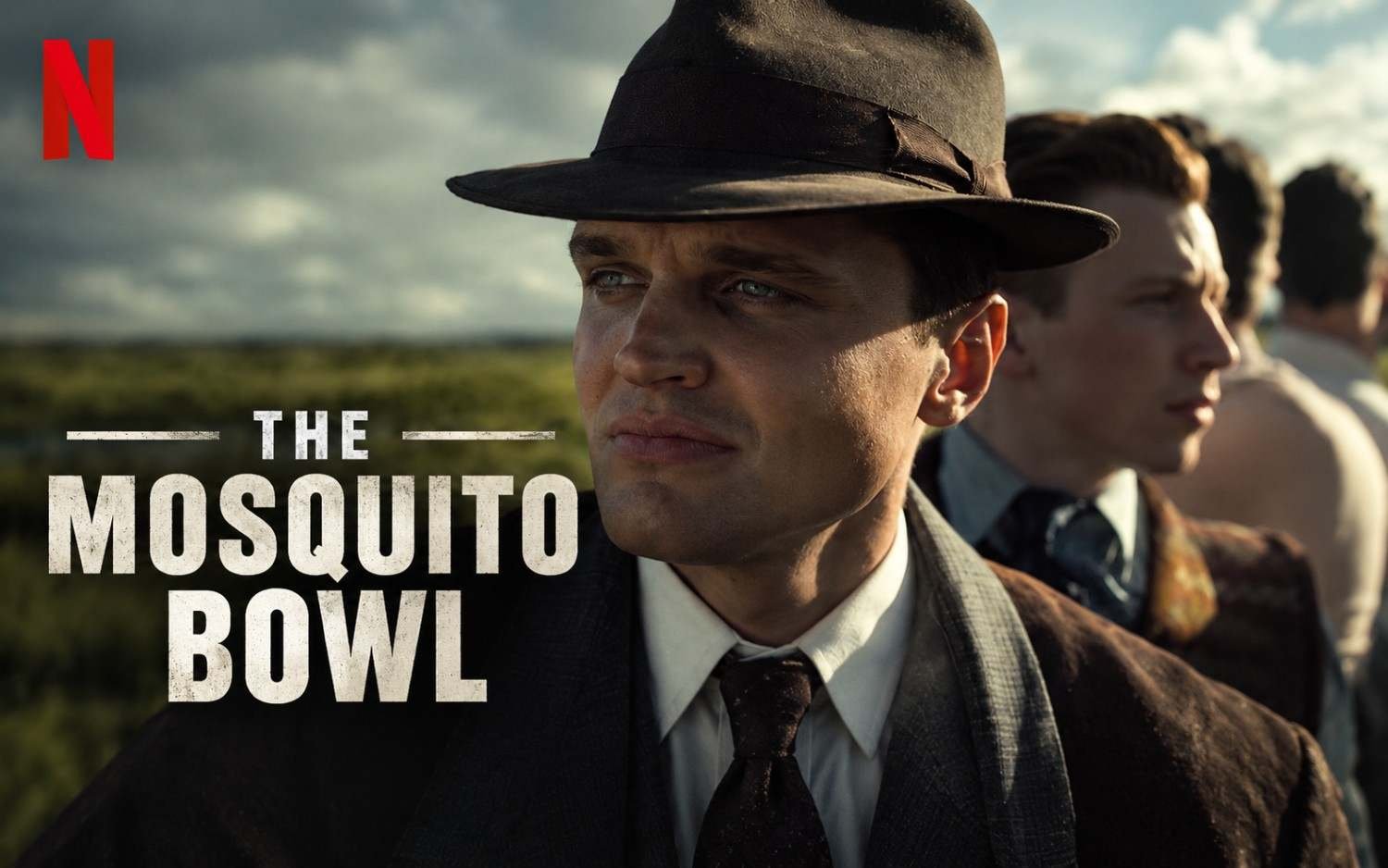
The Mosquito Bowl | Netflix | Nicholas Galitzine | Bill Skarsgård
Movie Details
| Field | Details |
| Movie Name | The Mosquito Bowl |
| Director | Peter Berg |
| Lead & Supporting Cast | Nicholas Galitzine, Bill Skarsgård, Ray Nicholson, Tom Francis |
| Genre | Historical War Drama / Sports Biography |
| Release Date / OTT Platform | Theaters October 30 / Streaming exclusively on Netflix |
| Rating | ★★★★☆ (4 out of 5 Stars) |
Introduction & Overview
Directed by acclaimed filmmaker Peter Berg—renowned for his high-octane human dramas such as Lone Survivor and Friday Night Lights—The Mosquito Bowl arrives on Netflix as one of the most anticipated historical war dramas of the year. Adapting Buzz Bissinger’s powerful non-fiction chronicle, the film merges the raw intensity of collegiate football ambition with the harrowing reality of World War II combat. Anchored by dynamic performances from Nicholas Galitzine and Bill Skarsgård, alongside a strong ensemble that includes Ray Nicholson and Tom Francis, the movie explores how young athletes trading gridiron glory for military fatigues faced an entirely different kind of battleground in the Pacific Theatre.
From its opening moments, The Mosquito Bowl establishes an atmosphere that is equal parts muscular action and emotional weight. The narrative draws a stark, visceral comparison between the adrenaline-fueled violence of American football and the sheer, unyielding chaos of frontline warfare. Rather than relying purely on familiar war-movie tropes, the film crafts an intimate exploration of psychology, brotherly bonds, and existential dread. Early buzz around this production highlights its relentless pacing, vivid visual storytelling, and deeply grounded emotional performances, marking it as a standout addition to Netflix’s prestigious roster of war cinema.
The Mosquito Bowl | Netflix | Nicholas Galitzine | Bill Skarsgård
Detailed Plot Summary
Set during the height of World War II, The Mosquito Bowl traces the remarkable journey of collegiate football stars who put their promising athletic careers on hold to enlist in the United States Marine Corps. As young men celebrated for their athleticism, physical resilience, and leadership on university fields, they suddenly find themselves thrust into brutal military training camps before being deployed to the mud, humidity, and relentless firefights of the Pacific war zone.
The core narrative revolves around the psychological transition these young men undergo. On the football field, combat was simulated—a test of strength, strategy, and collective will defined by clear rules and boundary lines. In the dense jungles and chaotic beach landings of the Pacific, those rules disappear completely. The central focus of the plot builds toward an iconic, bittersweet moment in military history: a legendary football game organized by servicemen on Guadalcanal, nicknamed “The Mosquito Bowl,” played just before they were deployed into the legendary, deadly invasion of Okinawa.
Rather than romanticizing conflict, the screenplay—co-written by Peter Berg and Mark L. Smith—chronicles the grueling eight weeks of combat preparation, the overwhelming physical toll of trench warfare, and the mental armor required to endure relentless bombardments. Narrated through introspective monologues that describe a state of pure instinctual survival—referred to by characters as a blinding “white buzz”—the film masterfully balances lighthearted moments of camaraderie, athletic competition, and victory celebrations with the horrifying suddenness of battlefield casualties. The narrative moves fluidly between pre-war nostalgia and the grim reality of military duty, keeping audience members emotionally invested in the fate of every young soldier hitting the shore.
Cast Performances & Character Breakdown
The casting of The Mosquito Bowl is one of its greatest assets, featuring a blend of rising Hollywood talent and seasoned dramatic actors who bring nuance to their respective roles:
Nicholas Galitzine
Nicholas Galitzine delivers a transformative performance that grounds the film’s emotional heart. Moving away from his lighter romantic roles, Galitzine captures the quiet intensity and complex inner world of a young athlete turned soldier. He portrays the physical intensity of a gridiron leader with equal conviction as the quiet horror of a man processing the chaotic trauma of beach landings. His voiceover narration regarding the sensory overload of combat sets the tone for the movie, providing a chilling look into a soldier’s internal psyche.
Bill Skarsgård
Bill Skarsgård delivers another magnetic screen presence, bringing his trademark intensity and brooding gravity to the narrative. Skarsgård excels at portraying a hardened soldier whose quiet resolve masks deep vulnerability. His expressive eyes convey the silent trauma of combat long before words are spoken. Skarsgård’s dynamic with Galitzine serves as the dramatic backbone of the movie, representing the sharp contrast between youthful optimism and the harsh realities of wartime survival.
Ray Nicholson
Ray Nicholson delivers a standout supporting performance that brings essential energy and raw charisma to the platoon. Portraying a headstrong, spirited soldier who uses humor and boisterous physical toughness to keep morale high, Nicholson shines in group sequences. His presence offers a necessary counterweight to the movie’s heavy dramatic beats, making his character’s evolution through the horrors of war particularly tragic and impactful.
Tom Francis
Tom Francis rounds out the core unit with a grounded, highly relatable performance. Representing the everyday young men forced into extraordinary and lethal circumstances, Francis plays his role with understated authenticity. His character highlights the bond between squad mates, showcasing how shared hardship creates connections stronger than blood.
Direction, Screenplay & Technical Aspects
Director Peter Berg brings his trademark visceral realism to The Mosquito Bowl, effectively synthesizing the frantic energy of Friday Night Lights with the tactile combat grit of Lone Survivor. Collaborating with screenwriter Mark L. Smith, Berg crafts a script that balances fast-paced kinetic action with quiet, character-driven introspection. The film avoids decorative glorification, choosing instead to focus heavily on the sensory details of military life—the deafening roar of artillery, the heavy mud, and the crushing anxiety before a beach landing.
Cinematography & Visual Design
The visual landscape created by the cinematography team is staggering. Contrast is utilized expertly throughout the film: bright, sun-drenched fields of collegiate athletic glory stand in stark opposition to the desaturated, muted tones of the Pacific battlefields. The camera work is dynamic and intimate, employing handheld setups during combat sequences to immerse the viewer directly into the chaos alongside the soldiers.
Editing, Sound & Score
The editing keeps the narrative moving at a brisk, engaging pace, seamlessly cutting between high-stakes sports action and intense military skirmishes without breaking the film’s rhythm. Sound design plays a pivotal role in establishing atmosphere—the hum of tropical insects, the concussive thump of mortars, and the internal soundscape of the “white buzz” create an immersive auditory environment. The musical score complements this perfectly, shifting from triumphant orchestral arrangements during athletic sequences to low, atmospheric tension during combat missions.
Strengths & Weaknesses / Pros & Cons
Pros
- Exceptional Lead Performances: Nicholas Galitzine and Bill Skarsgård deliver career-defining dramatic turns that add deep emotional resonance to the historical narrative.
- Masterful Direction: Peter Berg skillfully bridges the sports and war genres, utilizing raw visual storytelling to maintain high emotional and physical stakes throughout.
- Visceral Sound Design & Cinematography: The sensory soundscape and immersive camerawork effectively place viewers directly onto the battlefield and the gridiron.
- Authentic Historical Grounding: Based on true events and Buzz Bissinger’s source material, the film honors the real-life sacrifices of Marine servicemen with sincerity and respect.
Cons
- Relentless Pacing: The transition from sports-focused camaraderie to intense war drama happens rapidly, which may leave viewers wanting more time with the characters’ pre-war lives.
- Intense Graphic Realism: The visceral depiction of warfare, combat injuries, and explosions may prove overwhelming for sensitive viewers.
Final Verdict & Target Audience
The Mosquito Bowl is a deeply moving, action-packed cinematic tribute that successfully captures both the triumph of human spirit and the devastating cost of war. By showcasing the remarkable true story of elite collegiate athletes who traded national stardom for military service, the film delivers an unforgettable narrative about brotherhood, sacrifice, and duty.
This movie is a absolute must-watch for fans of historical war dramas like Band of Brothers or The Pacific, as well as viewers who appreciate character-driven sports films with profound emotional depth. Whether experienced on the big screen or streamed via Netflix, The Mosquito Bowl stands as a gripping, poignant masterpiece that demands to be seen.