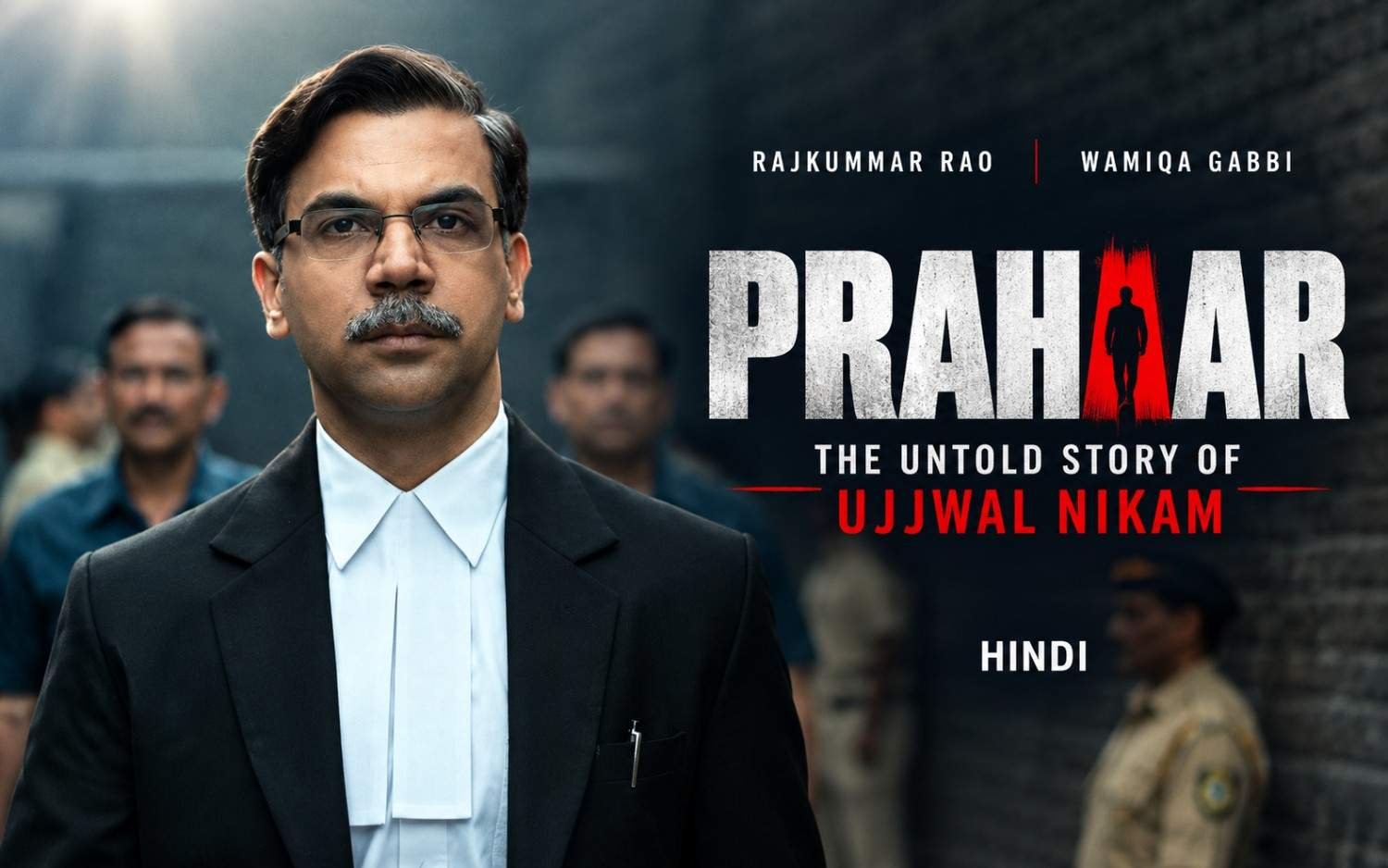
Prahaar: The Untold Story of Ujjwal Nikam – Hindi | Rajkummar R | Wamiqa Gabbi
Movie Details
| Attribute | Details |
| Movie Name | Prahaar: The Untold Story of Ujjwal Nikam |
| Director | Avinash Arun Dhaware |
| Lead Cast | Rajkummar Rao (as Special Public Prosecutor Ujjwal Nikam), Wamiqa Gabbi |
| Supporting Cast | Jaideep Ahlawat, Sikandar Kher, Ashish Vidyarthi, Lalit Prabhakar, Sandeep Kulkarni, Ritvik Sahore |
| Genre | Biographical Courtroom Drama / Historical Thriller |
| Release Date / Platform | October 16, 2026 (Theatrical Release) |
| Rating | 4.2 / 5 Stars |
Prahaar: The Untold Story of Ujjwal Nikam – Hindi | Rajkummar R | Wamiqa Gabbi
Introduction & Overview
The Indian biographical cinema landscape frequently gravitates toward political leaders, athletes, and freedom fighters. However, Prahaar: The Untold Story of Ujjwal Nikam brings a fresh focus to the legal arena by chronicling the life of India’s famed Special Public Prosecutor, Adv. Ujjwal Nikam. Produced under Maddock Films by Dinesh Vijan and directed by Avinash Arun Dhaware, the film generates interest by pairing a compelling legal narrative with lead performances from Rajkummar Rao and Wamiqa Gabbi.
Prahaar explores the internal mechanisms of high-profile state trials, focusing on the prosecution of Ajmal Kasab following the 26/11 Mumbai terrorist attacks. Rather than framing the legal process merely as procedural routines, the narrative treats the courtroom as an arena where national security, international diplomacy, human rights, and evidence evaluation intersect. Supported by a strong ensemble cast—including Jaideep Ahlawat, Sikandar Kher, and Ashish Vidyarthi—the film blends biographical accuracy with the dramatic pacing typical of Maddock Films’ productions.
Detailed Plot Summary
The narrative centers on the aftermath of November 26, 2008, when ten heavily armed terrorists executed coordinated attacks across key locations in Mumbai. Following the capture of Ajmal Kasab—the sole surviving attacker—the Indian legal system faced international scrutiny. The state appointed Special Public Prosecutor Ujjwal Nikam (Rajkummar Rao) to represent the prosecution.
The screenplay details Nikam’s process as he structures the case against Kasab. The defense attempts to exploit procedural gaps, challenging digital evidence, questioning witness identification, and raising claims regarding the defendant’s age and alleged custodial coercion. Simultaneously, the prosecution navigates diplomatic visits from foreign delegations demanding concrete evidence, highlighting the geopolitics tied to the trial.
Beyond the courtroom, the story examines Nikam’s personal life and the psychological toll of managing a high-profile case. Facing death threats and sustained public scrutiny, Nikam balances his personal safety with his duty to the state. The trial serves as the primary storyline, showing how circumstantial details, forensic reports, and witness testimonies were brought together to secure a conviction.
Cast Performances & Character Breakdown
Rajkummar Rao as Adv. Ujjwal Nikam
Rajkummar Rao’s portrayal of Ujjwal Nikam is central to the film. Rao adopts Nikam’s distinct mannerisms, voice modulation, and localized delivery style without resorting to caricature. He projects both composure during dense legal arguments and quiet resolve during high-pressure moments. Rao brings weight to key sequences, such as addressing international delegates or countering defense claims.
Wamiqa Gabbi
Wamiqa Gabbi provides a steady presence alongside Rao, offering a narrative bridge between the legal drama and its broader emotional core. Her performance brings balance to the intense courtroom environment, grounding the surrounding tension.
Supporting Ensemble
- Jaideep Ahlawat & Sikandar Kher: Both actors play pivotal roles in the courtroom sequences. Ahlawat brings intensity to his character, creating a friction with Rao’s character during cross-examinations. Kher adds nuance to the legal exchanges, keeping the courtroom debates compelling.
- Ashish Vidyarthi, Lalit Prabhakar & Sandeep Kulkarni: These veteran actors play key institutional figures, law enforcement officers, and state representatives. Their presence adds weight to the administrative side of the prosecution.
- Ritvik Sahore: Playing a key supporting role, Sahore delivers a grounded performance that highlights the impact of the tragedy on everyday citizens.
Direction, Screenplay & Technical Aspects
Director and cinematographer Avinash Arun Dhaware uses a restrained visual style throughout the film. Rather than relying on dramatic camera movements, Dhaware utilizes tight close-ups and deliberate framing during courtroom scenes to emphasize the tension between the prosecution, defense, and witness stand.
Sumit Roy’s screenplay keeps the legal dialogue accessible while preserving technical accuracy. Charu Shree Roy’s editing maintains a steady pace, moving between trial arguments, investigative flashbacks, and private moments without disrupting narrative continuity. The musical score supports the drama subtly, providing ambient backing during intense cross-examinations rather than overpowering the dialogue.
Strengths & Weaknesses
Strengths (Pros)
- Lead Performance: Rajkummar Rao delivers an accurate, non-dramatized portrayal of Adv. Ujjwal Nikam.
- Screenplay Structure: The narrative breaks down complex legal arguments into accessible story beats without oversimplifying the law.
- Ensemble Cast: Strong performances from Jaideep Ahlawat, Wamiqa Gabbi, and Ashish Vidyarthi enhance the narrative.
- Technical Realism: Direction and production design reflect actual Indian courtrooms, avoiding hyperbolic cinematic conventions.
Weaknesses (Cons)
- Pacing Adjustments: The transition between high-stakes courtroom debate and secondary subplots can slow the momentum slightly during the middle act.
- Heavy Exposition: Certain sequences require significant dialogue to explain legal precedents and procedural details to the audience.
Final Verdict & Target Audience
Prahaar: The Untold Story of Ujjwal Nikam offers a detailed look into one of the most prominent trials in modern Indian history. Driven by Rajkummar Rao’s central performance and Avinash Arun Dhaware’s steady direction, the film provides insight into the work required to secure a conviction under global visibility.
The movie appeals to fans of biographical cinema, legal thrillers, and real-life political histories. Its measured approach and strong performances make it a compelling viewing experience for audiences interested in courtroom dramas.