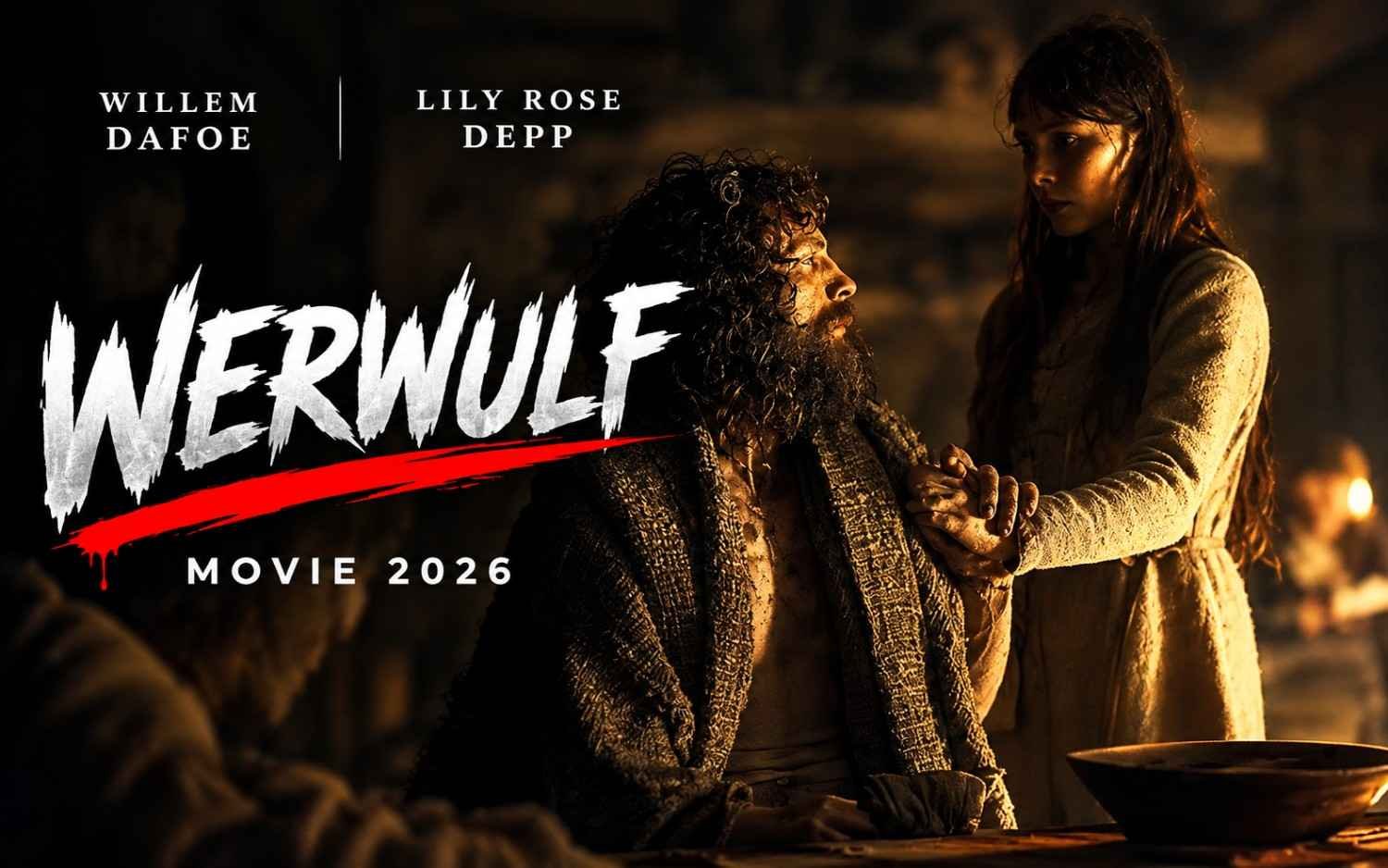
WERWULF – Movie 2026 | Willem Dafoe | Lily Rose Depp
Movie Details
| Attribute | Details |
| Movie Name | WERWULF |
| Director | Robert Eggers |
| Lead & Supporting Cast | Willem Dafoe, Aaron Taylor-Johnson, Lily-Rose Depp, Ralph Ineson |
| Genre | Period Horror / Gothic Thriller / Mystery |
| Release Date / OTT Platform | Theatrical Release: Christmas 2026 (Focus Features) |
| Rating | 4.5 / 5 Stars |
WERWULF – Movie 2026 | Willem Dafoe | Lily Rose Depp
Introduction & Overview
Robert Eggers has firmly established himself as a modern master of historical horror, having previously enchanted and terrified audiences with The Witch, The Lighthouse, The Northman, and Nosferatu. With his 2026 cinematic spectacle, WERWULF, Eggers turns his meticulous lens toward medieval lycanthropy folklore, delivering an atmospheric thriller that instantly sets the film community ablaze with anticipation and awe. Co-written with Icelandic author Sjón, the film transports viewers to a grim medieval landscape dominated by religious paranoia, ancient curses, and primordial dread.
From the opening frames shown in Focus Features’ official footage, WERWULF radiates an irresistible aura of dread and authentic period realism. Featuring a powerhouse ensemble cast led by Willem Dafoe, Aaron Taylor-Johnson, and Lily-Rose Depp, the film generates massive hype as one of the most anticipated horror releases of the year. It does not merely present a monster movie; rather, it crafts a deeply immersive exploration of human vulnerability, faith, and the beastly nature lurking within mankind when confronted by superstitious terror and harsh realities.
Detailed Plot Summary
Set against the stark, bleak backdrop of a secluded medieval settlement, WERWULF crafts a narrative steeped in historical realism and mythic terror. The story begins when a livestock flock is found ruthlessly slaughtered, leaving a impoverished agrarian family in ruin. A young daughter discovers the bloody remnants scattered across the frosted earth, signaling that a ravenous entity has descended upon the realm. Local villagers, already consumed by religious superstition and bleak living conditions, quickly attribute the carnage to “the great wolf”—a predatory force believed to be spoiled with sin and demonic influence.
Tensions escalate dramatically when an authoritative envoy, sent on behalf of the King, arrives in the hamlet to rally the populace for a relentless beast hunt. The messenger declares that every wolf must be destroyed to purify the land and protect the crown’s subjects. However, within the fragile family unit at the center of the story, horror strikes far closer to home. A devoted wife, played by Lily-Rose Depp, desperately prays for the safety of her husband, Ian (Aaron Taylor-Johnson), who harbors a terrifying secret. Ian suffers under a mysterious affliction—a visceral, agony-inducing curse that causes him to undergo terrifying transformations under the light of the full moon.
As blood thirsty hunting parties comb through dense, snow-covered forests and treacherous rocky terrains, distrust festers rapidly among the villagers and authority figures like the fanatic elder portrayed by Willem Dafoe. The line between righteous justice and feral violence blurs completely. Mysterious voices demand that the cursed prey “feed upon the flesh of mankind” in exchange for spiritual salvation, forcing the characters into an existential struggle. The narrative avoids predictable jump-scares, instead building an escalating pressure cooker of psychological tension, violent encounters, and tragic dilemmas where surviving the beast outside becomes just as dangerous as facing the monster within.
Cast Performances & Character Breakdown
The absolute backbone of WERWULF lies in its exceptional cast, whose committed performances elevate the film’s complex, archaic script into a haunting experience.
Aaron Taylor-Johnson as Ian
Aaron Taylor-Johnson delivers a raw, physically demanding performance as Ian, the tortured husband at the center of the lycanthropic curse. Taylor-Johnson captures the excruciating agony of a man desperately trying to restrain the monstrous impulse raging within his body. His portrayals of vulnerability during moments of quiet affection with his family contrast sharply with his frantic, mud-drenched physical transformations. He conveys deep emotional trauma primarily through his expressive eyes and strained voice, making Ian both a pitiable protagonist and a terrifying force of nature.
Willem Dafoe as the Religious Elder / King’s Huntsman
Willem Dafoe continues his fruitful collaboration with director Robert Eggers, delivering yet another iconic, scene-stealing performance. Playing a stern, fanatic figure enforcing the King’s decree, Dafoe projects an imposing screen presence defined by intense gaze, weathered authority, and uncompromising zeal. His line delivery in archaic dialogue feels entirely natural and deeply chilling. Dafoe embodies the terrifying rigidity of medieval authority, serving as a powerful antagonist whose dogmatic search for the beast creates as much horror as the creature itself.
Lily-Rose Depp as the Devoted Wife
Lily-Rose Depp turns in a deeply moving performance as the grief-stricken yet resilient wife struggling to protect her family. Depp brings authentic warmth and intense desperation to her role, serving as the emotional core of the film. Her frantic prayers to keep her husband safe from his “cursedness” provide the narrative with genuine stakes. Rather than playing a passive victim, Depp portrays a fiercely protective maternal figure who must navigate the treacherous waters of village suspicion and horrifying supernatural realities.
Supporting Cast: Ralph Ineson and Ensemble
The supporting cast, featuring veterans like Ralph Ineson, provides crucial texture to the film’s bleak environment. Ineson’s deep, unmistakable voice and rugged presence add significant gravity to the local hunting party. The entire ensemble ensemble, down to the child actors depicting the traumatized village youth, operates with immaculate discipline, maintaining the somber, believable tone essential for period horror.
Direction, Screenplay & Technical Aspects
Robert Eggers’ directorial vision in WERWULF is nothing short of extraordinary. Reuniting with screenwriter Sjón, Eggers constructs a screenplay that treats medieval folklore with absolute seriousness. The dialogue is framed in authentic period-accurate prose, immersing viewers completely into the mindset of a society ruled by faith, fear, and nature.
From a technical perspective, the cinematography by Jarin Blaschke is a visual masterpiece. Utilizing natural light, muted color palettes, flickering torchlight, and icy grey tones, the camera frames the vast, desolate wilderness like a living, breathing painting. Long, static takes and deliberate camera movements build unbearable atmospheric dread, allowing the environment to feel claustrophobic despite its open outdoor settings.
The sound design and musical score work in perfect harmony with the visual aesthetic. The background score mixes haunting string arrangements, guttural vocal chants, and harsh wind soundscapes to create a constant sense of impending doom. The sound effects—such as crunching snow, tearing flesh, howling winds, and heavy armor—are mixed with crisp detail, making every violent encounter feel grounded and visceral. Furthermore, the practical effects utilized for creature transformations and bloody aftermaths showcase an incredible dedication to craftsmanship, eschewing obvious digital effects for authentic visual horror.
Strengths & Weaknesses / Pros & Cons
Pros
- Masterful Atmosphere & Realism: Robert Eggers excels at creating an authentic, oppressive medieval environment through meticulous period detail, costume design, and natural lighting.
- Exceptional Performances: Outstanding acting across the board, particularly Willem Dafoe’s terrifying zeal and Aaron Taylor-Johnson’s intense physical commitment.
- Visceral Practical Effects: The creature design and bloody transformations rely heavily on practical craftsmanship, offering a grounded and terrifying visual experience.
- Haunting Audio Design: A stark, minimalist musical score combined with crisp, immersive sound design amplifies the film’s psychological terror.
Cons
- Slow-Burn Pacing: Audiences expecting a fast-paced action movie might find the deliberate narrative progression and dense atmospheric build-up slow.
- Challenging Archaic Dialogue: The strictly period-accurate dialogue can occasionally prove difficult to follow for viewers unaccustomed to historical language styles.
Final Verdict & Target Audience
WERWULF stands as a monumental triumph in cinematic horror, proving once again that Robert Eggers is an unrivaled director when it comes to historical genre filmmaking. By blending psychological dread, religious paranoia, and tragic lycanthropy, the film delivers an unforgettable, chilling experience that lingers long after the credits roll.
This movie is absolute mandatory viewing for fans of arthouse horror, period dramas, and dark folklore classics like The Witch and Nosferatu. Due to its spectacular visual scale, haunting audio design, and gorgeous cinematography,
WERWULF is best experienced on the big screen in theaters. However, its rich narrative layers will also make it a prized centerpiece for horror enthusiasts seeking a deep, atmospheric rewatch on streaming platforms.